REDG Insights
7 Top Seller Lead Scoring Methods That Close
REDG Team · · 6 min read

Use top seller lead scoring methods to prioritize motivated homeowners, enforce follow-up, and move more real estate opportunities toward contract faster.
A caller reaches an absentee owner who says, “Maybe. Call me next month.” Another owner says they inherited a vacant property, taxes are behind, and they need to sell before a probate deadline. If both leads land in the CRM with the same status, your acquisition team has already lost time. The best top seller lead scoring methods separate casual conversations from seller situations that deserve immediate action.
Lead scoring is not a cosmetic CRM exercise. It is the operating system for deciding who gets called again, who gets a text sequence, who gets an acquisition manager involved, and who should be removed from active pursuit. Done right, it protects your team from weak data, inconsistent follow-up, and the expensive habit of treating every lead like a priority.
Why Seller Lead Scoring Breaks Down
Most investors score leads too broadly. They label a homeowner “warm,” assign a vague follow-up date, and hope the next caller can interpret the notes. That is not a scoring model. It is a memory test with deal flow attached.
A useful score must answer two questions: How likely is this owner to sell, and what should happen next? Motivation without contactability can sit in nurture. A highly reachable owner with no urgency may need a lighter cadence. A seller with clear pain, a realistic price range, decision-making authority, and a defined timeline should move fast.
The trade-off is simple. An overly complicated system creates bad data because callers will not use it consistently. An overly simple system buries real opportunities under hundreds of “warm” leads. Build a model your callers can apply during a live conversation and your acquisition team can trust after it ends.
1. Score Motivation From Specific Seller Pain
Motivation should carry the most weight because it tells you why the owner may act now. But “motivated” is not enough. Your team needs to document the reason behind it.
High-scoring motivation signals include inherited property pressure, vacancy, code violations, landlord fatigue, divorce, job relocation, delinquent taxes, foreclosure timelines, major repairs, and a property that is draining cash. A homeowner who says they are “thinking about selling someday” is not equal to an owner who needs to liquidate an inherited house within 30 days.
Use direct call notes, not assumptions. Record the seller’s stated problem in plain language, then attach a score based on urgency and consequence. For example, a vacant house with no deadline may score moderately. A vacant house with a pending tax sale should score near the top of the queue.
2. Score Timeline, Not Just Interest
Many lead sheets fail because they treat interest as intent. A seller can be friendly, open to an offer, and still have no reason to make a decision for six months. Your caller needs to establish a credible timeframe.
A practical timeline scale might classify sellers as immediate, 30-60 days, 60-90 days, long-term, or unknown. Immediate does not always mean a same-day contract. It means the seller has a near-term event, deadline, move, financial need, or property problem that requires movement.
Timeline must be supported by context. “I want to sell quickly” means little without asking why. “I close on my new home in three weeks and this rental is empty” is a documented acquisition opportunity. Score the second seller higher because the follow-up has a reason and a clock.
3. Score Price Flexibility and Offer Fit
A motivated seller who expects retail pricing may still be a bad acquisition lead for a wholesale or creative-finance operation. Price expectations belong in the score because they tell you whether the opportunity fits your buying model.
Your caller does not need to negotiate the entire deal. They do need to identify whether the seller has a number, how that number was formed, and whether there is room to discuss condition, speed, convenience, or terms. A seller who says, “I need $300,000 because Zillow says so,” requires a different workflow than a seller who says, “I would take less if I do not have to repair it.”
Do not automatically disqualify a high-price lead. A seller may be anchored today but soften after failed retail attempts, repair estimates, or continued holding costs. Score current offer fit accurately, then route the lead into the right cadence instead of forcing an acquisition manager into a premature call.
4. Score Contactability and Decision Authority
An excellent property situation is not actionable if you cannot reliably reach the person who can say yes. Contactability measures whether the seller answers calls, responds to texts, confirms a preferred time, and engages in a real conversation.
Decision authority measures whether you are speaking with the actual owner or someone who can move the sale forward. Estates, divorces, trusts, and jointly owned properties often require multiple parties. That does not make them bad leads. It means the workflow needs to capture who is involved, what approvals are required, and whether another decision-maker must be contacted.
A lead with strong motivation but incomplete authority should trigger a clear task: identify the additional owner, executor, attorney, or family member and set the next contact step. Do not leave the CRM note saying “seller needs to talk to brother.” That is a follow-up failure waiting to happen.
5. Score Property Condition and Deal Complexity
Condition affects both seller motivation and exit strategy. A property needing major repairs may be ideal for a cash offer but unsuitable for a buyer expecting a clean retail asset. Record the condition in enough detail for the acquisition manager to make an informed next move.
Focus on material issues: roof age, foundation concerns, fire or water damage, deferred maintenance, tenant occupancy, title questions, liens, probate, code violations, and access limitations. These factors should not always lower a lead score. They should adjust the route.
For example, a distressed house with a cooperative seller and a reasonable price can be a high-score cash opportunity. A well-maintained property with little equity may be a better creative-finance conversation. The point is not to score only for easy deals. It is to identify the right deal structure before time gets wasted.
6. Build Scores Around Follow-Up Actions
The strongest lead-scoring methods do not end with a number. They assign an operational response. A 90-point lead without a next task is still a missed opportunity.
Set score bands that trigger ownership and timing. Your highest tier should receive same-day acquisition review, a scheduled callback, and multiple contact attempts if needed. Mid-tier leads may enter a structured weekly follow-up sequence with new value-based questions. Lower-tier leads can remain in long-term nurture, especially if the property profile is attractive but timing is weak.
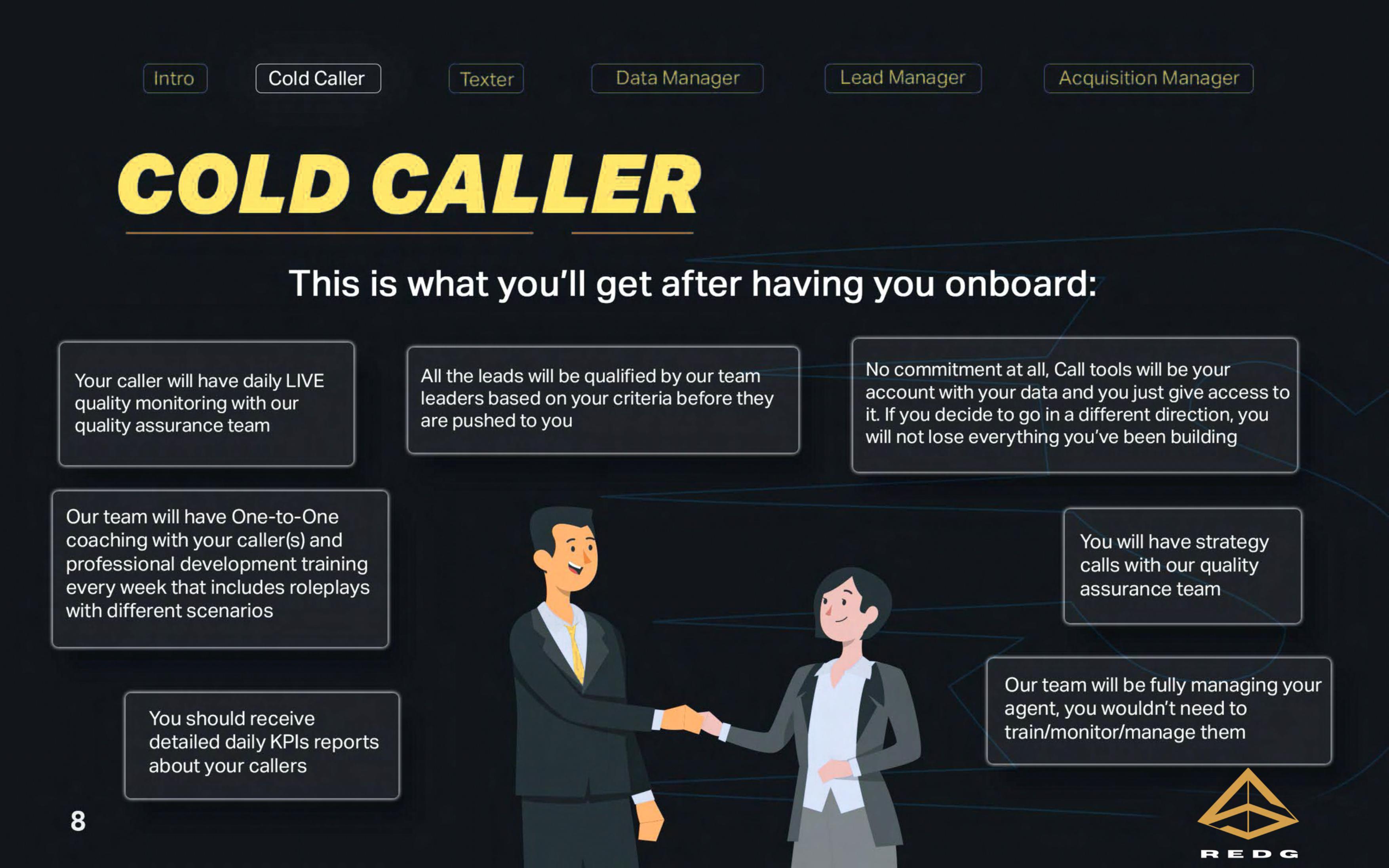
Every lead record should show the last contact, the next action, the assigned owner, and the reason for the score. This is where managed acquisition support creates leverage. A trained caller qualifies the conversation, a lead manager enforces the next step, and an acquisition manager takes over when the lead meets the handoff threshold. One accountable team prevents the usual gap between “good conversation” and “nobody called back.”
7. Audit Scores Against Closed Deals
Your model is only useful if it predicts outcomes. Review closed contracts, appointments, and dead leads every month. Ask which score factors consistently appeared in deals that converted, which factors produced false positives, and where callers are using categories differently.
If most closed deals had a clear timeline and price flexibility, but your system gives those fields minimal weight, adjust it. If callers are labeling too many leads as urgent, tighten the definition. Quality control matters here. Recorded calls and note reviews reveal whether the score reflects what the seller actually said or what the caller hoped to hear.
REDG teams work best when the score is tied to production standards: qualified conversation quality, complete CRM notes, scheduled follow-up, and clean handoffs. A score should be evidence-based, not a feeling entered at the end of a call.
Make Every Score Earn Its Place
The goal is not to create the most detailed spreadsheet in your market. The goal is to make sure the right seller receives the right level of attention before a competitor does. Start with motivation, timeline, offer fit, authority, condition, and contactability. Then require a next action for every score that matters.
When your team can explain exactly why a seller is prioritized and exactly what happens next, your pipeline stops being a pile of conversations. It becomes a controlled acquisition process built to produce contracts.
Build your calling team
REDG recruits, trains, and manages Egyptian virtual assistants for real estate investors. Explore our real estate virtual assistants, wholesaling VAs, or listen to real calls.